

Is Online Alcohol Delivery Safe? 2026 Guide
Table of Contents
- Is Online Alcohol Delivery Safe? What You Need to Know
- Alcohol Shipping Laws by State: What Changes at the Border
- How to Verify Online Liquor Store Legitimacy Before You Buy
- Age Verification Requirements for Alcohol Delivery
- Signs of a Safe Online Alcohol Delivery Order
- What Happens If Your Shipment Arrives Damaged or Spoiled
- Conclusion
- Frequently Asked Questions
Last Updated: October 4, 2026
Is Online Alcohol Delivery Safe? What You Need to Know
This guide breaks down the rules, red flags, and practical steps that separate a legitimate order from a costly mistake. Hoochie Hooch Distillery ships moonshine and sipping creams directly to customers, so we handle state-by-state compliance daily.
Below, we cover what changes at state lines, how to vet a retailer before you pay, what age verification looks like on delivery day, and what to do when a shipment arrives damaged.
Alcohol Shipping Laws by State: What Changes at the Border
That last category trips people up. A state may permit delivery while a specific county does not. Reputable retailers check both.
| Scenario | What It Means for Your Order | What to Do |
|---|---|---|
| State allows direct shipping | Retailer needs a valid permit | Confirm the permit is listed on the site |
| Control state with limits | Shipping may be blocked entirely | Ask the retailer before ordering |
| Dry county or restricted zone | Local rules override state rules | Verify your address qualifies |
| Cross-border shipment | Excise tax and reporting apply | Expect the retailer to handle it |
Shipping restrictions also cover prohibited locations: retailers generally cannot deliver to post office boxes, and some cannot ship to certain institutional addresses.
Alcohol excise tax is another piece most buyers never think about. Licensed retailers build it into the transaction and remit it to the destination state. If a site never mentions tax handling, that's a compliance signal.
How to Verify Online Liquor Store Legitimacy Before You Buy
Start with the license. Licensed retailers display their permit number, usually in the site footer or on an about page, and you can cross-reference it against your state's alcohol control board registry.
Then check the address. A real distillery or retailer has a physical location you can look up; a site with no address, or one that resolves to a mailbox service, deserves scrutiny.
Payment security matters more than most buyers realize. A secure payment gateway encrypts your card details in transit.
- License or permit number is displayed and verifiable
- Physical business address is listed and real
- Refund and damaged-shipment policy is published
- Checkout uses a secure payment gateway
- Contact method reaches a person, not a form that goes nowhere
- Product pages list alcohol-by-volume for each item
Counterfeit alcohol is a real problem in unregulated corners of online sales, showing up most often in deeply discounted listings and third-party marketplace resellers. If a bottle of small-batch spirits is priced far below the category norm, treat that as a warning rather than a bargain.
Age Verification Requirements for Alcohol Delivery
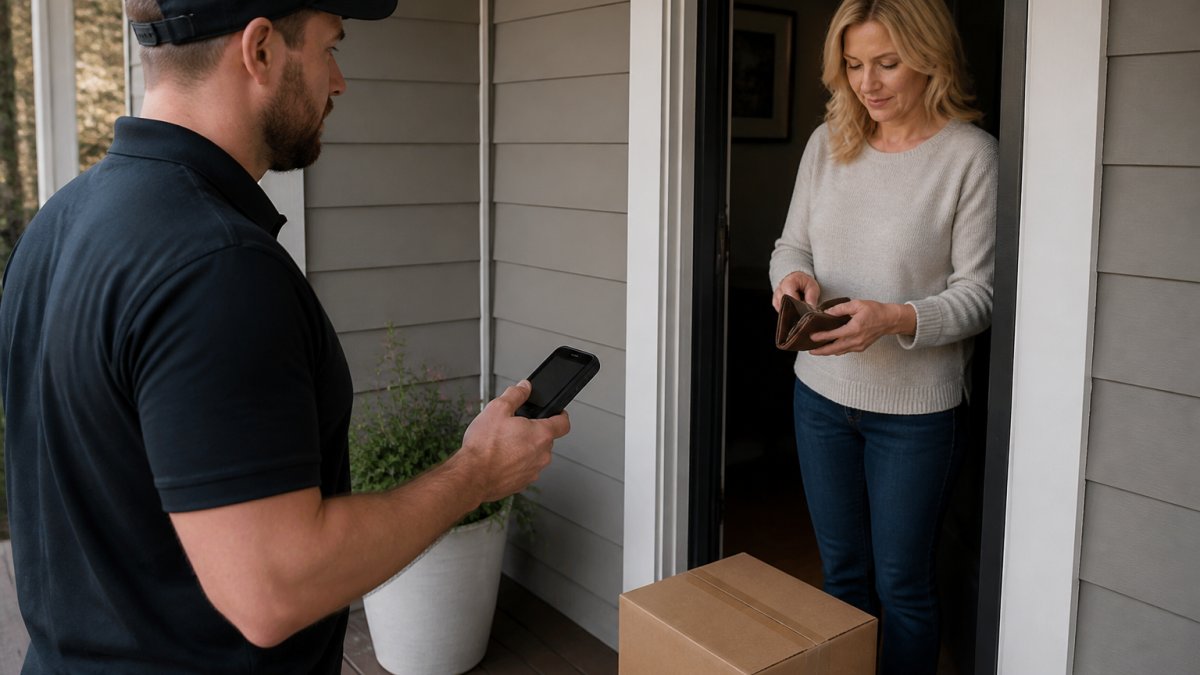
The two-step structure matters: checkout verification confirms the buyer, delivery verification confirms the person receiving the package. Signature-required delivery is standard because it forces a face-to-face handoff.
What happens at checkout
At checkout, most licensed retailers use one of three methods:
- Age-estimation software that scans a selfie or a government ID and matches the date of birth against a database, the same category of tool used by rideshare and gambling apps.
- Third-party verification vendors that cross-check your name, date of birth, and address against public records. Mismatches are flagged for manual review.
- Manual review where a human compares your uploaded ID to your order details. Slower, but common with smaller craft producers.
A compliant retailer will not let you complete checkout with a prepaid card and no ID, a red flag for fraud and underage purchasing.
What happens at the door
ID scanning protocols for delivery drivers are stricter than most people expect. Drivers are trained to:
- Ask for a physical government-issued ID, not a photo on a phone.
- Match the photo to the person standing in front of them.
- Confirm the date of birth shows 21 or older.
- Check that the ID is not expired, altered, or borrowed.
- Scan or log the ID in the delivery app, which timestamps the verification.
Expired IDs are typically rejected, as are deliveries to someone visibly intoxicated or where the person answering the door is under 21 even if the buyer is of age. The recipient, not the purchaser, is who the law cares about.
Refusal procedures and what happens next
Delivery personnel training covers refusal procedures as well as ID checks. A driver who cannot complete verification takes the package back, and the order is returned or refunded per the retailer's policy, some charge a restocking or return-shipping fee, others absorb it. Read the policy before you order.
- Third-party delivery services add a layer: the courier must follow the same verification standard. If the courier's app doesn't prompt for an ID scan, that's a compliance gap on the retailer's side.
- Real-time tracking lets you see the delivery window so someone of legal age is home to receive it. Missed windows often trigger a return-to-sender, not a reattempt.
- Compliance standards require the retailer to keep verification records for audit purposes. State alcohol control boards can request those records, and a retailer that can't produce them is exposed.
The digital-privacy angle most guides skip
Age verification means handing a copy of your government ID to a company you may have just met. Before you upload anything, check whether the retailer's verification vendor publishes a retention policy.
A retailer that skips signature requirements is not doing you a favor. It's operating outside the rules that keep the channel legal, and putting your personal data in a system never built to protect it.
Signs of a Safe Online Alcohol Delivery Order
A safe order shows four things: a tracking number, a signature requirement, tamper-evident packaging, and a clear delivery window. If any of those are absent, the order is not built to protect you.
Tamper-evident packaging is the one buyers overlook most.
Safe delivery also means the retailer communicates: you should know when the package ships, roughly when it arrives, and who is authorized to sign.
The pre-purchase checklist most guides don't give you
Legal safety is only half the picture. The other half is digital safety, what happens to your card number, address, and ID the moment you hit "place order." Run this checklist before buying from any new site:
- The checkout URL starts with HTTPS and shows a padlock. If your browser warns you the connection isn't private, close the tab.
- Payment runs through a recognized processor, the kind that shows up as a branded gateway at checkout, not a generic form that asks for your card number directly on the retailer's page.
- The site never asks you to pay by wire transfer, gift card, or peer-to-peer app. Those payment methods are irreversible and are the single most common marker of a scam storefront.
- The privacy policy explains what data is collected and how long it's kept. If there's no privacy policy, or it's a copy-paste template that doesn't mention ID verification, treat that as a warning.
- Your card is charged at the time of order, not weeks later with no confirmation. Delayed, unexplained charges are a fraud pattern.
- The confirmation email comes from a domain that matches the store's website, not a free email provider.
That last point catches more bad actors than people expect: a polished storefront sending confirmations from a throwaway address is usually a drop-shipper or worse.
Fraud prevention runs both ways
Retailers screen orders for stolen card patterns; you should screen retailers for the reverse, a checkout asking for more personal data than the transaction requires. A compliant retailer collects only what it needs for age verification and shipping: name, address, date of birth, payment details. If a site asks for your Social Security number, employer, or a utility bill scan for a routine order, that's data harvesting, not compliance.
What to do when something feels off
If you've already ordered and something seems wrong, no tracking after several days, a charge that doesn't match the confirmation, a courier who won't scan your ID, document everything and contact the retailer through their published channel first. If they don't respond, your state's attorney general's office and your card issuer are the two escalation paths that get results.
Data privacy and payment security are legitimate concerns, and a compliant retailer treats them as part of the product, not an afterthought.
What Happens If Your Shipment Arrives Damaged or Spoiled
Photograph the box before opening it, the packing materials, and the damaged bottle or container. Timestamped photos are what a claims process runs on, and they take two minutes.
Then contact the retailer through their published channel, referencing your order number and attaching the photos.
Spoilage is a separate case from breakage. Temperature swings in transit can affect some products.
- Report within the window. Claims filed late are usually denied regardless of merit.
- Keep the original packaging. Some carriers require it for a damage claim.
- Don't discard the product. It's evidence until the claim closes.
Environmental impact is a fair question too: consolidated shipping on a full route uses less fuel per bottle than individual trips to a store.
Conclusion
The rules around online alcohol delivery are uneven, which makes verification your job as much as the retailer's. Check the license, confirm your state's shipping rules, and insist on signature delivery, those three habits eliminate nearly every risk.
At Hoochie Hooch Distillery, we built our online ordering around that standard. Our moonshine and sipping creams, from traditional pure moonshine to creative infusions like Cotton Candy and Watermelon Jalapeño, are made for people who want something handcrafted delivered to their door.
Get started with Hoochie Hooch Distillery and order with the confidence that comes from knowing exactly how your package is handled.
Frequently Asked Questions
Do delivery services verify ID for alcohol orders?
Yes. Reputable online alcohol delivery services require an adult signature and a valid government-issued ID at the door. The driver scans the ID or checks the birth date to confirm the recipient is 21 or older. Some states also require the driver to visually confirm the person matches the ID photo. If no one 21 or older is home, the delivery is returned and a re-delivery fee may apply. This ID scanning protocol is a legal requirement, not a suggestion, and it is one of the clearest signs that online alcohol delivery is safe.
How can I tell if an online alcohol retailer is legitimate?
Start by checking for a valid state liquor license number displayed on the site. Look for a secure payment gateway with HTTPS encryption, clear contact information, and a physical business address. Read the shipping policy to confirm they only ship to states where direct-to-consumer alcohol shipping is legal. Search for the brand name plus 'scam' or 'complaints' to see if other buyers reported issues. A licensed retailer will not pressure you with countdown timers or refuse to answer basic compliance questions.
Are there specific state restrictions for ordering moonshine online?
Yes. Alcohol shipping laws by state vary widely. Some states allow direct-to-consumer shipping from licensed distilleries, others restrict it to in-state retailers only, and a few prohibit it entirely. Dry counties and certain prohibited locations add another layer. Before ordering moonshine online, check the retailer's shipping map or state-specific regulations page. A legitimate seller will clearly list which states they can and cannot ship to, and they will not ask you to lie about your address to bypass a restriction.
What happens if I am not home to receive an alcohol delivery?
Most carriers will not leave alcohol unattended because a signature is required. If you miss the delivery, the package typically goes back to the carrier's local facility for a re-attempt or pickup. Some retailers charge a re-delivery fee, and others may cancel the order and refund the product cost minus shipping. To avoid this, track your order with real-time tracking and arrange for someone 21 or older to be home during the delivery window. If the package is returned and the seal is broken, the retailer may not be able to reship it.